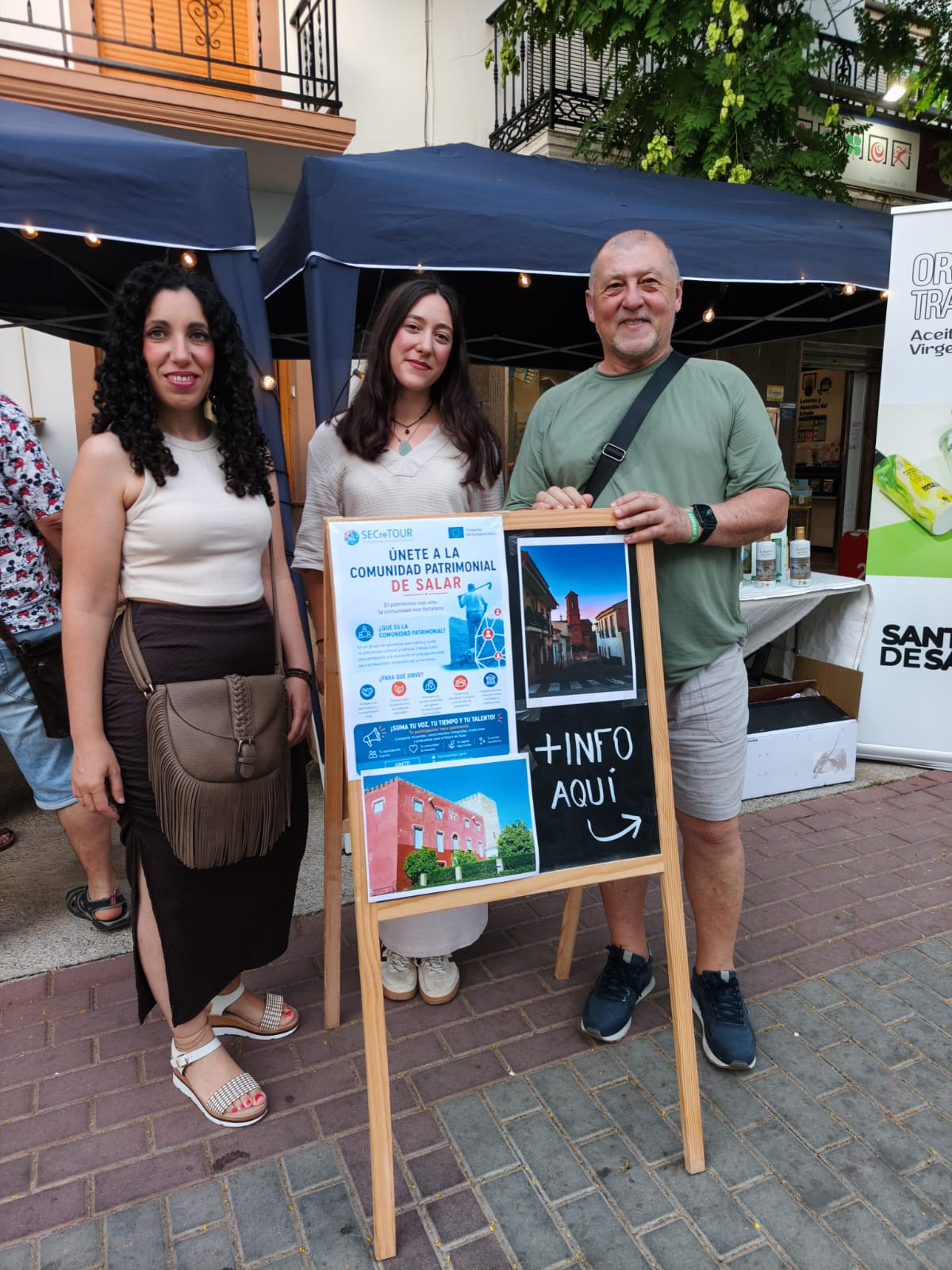
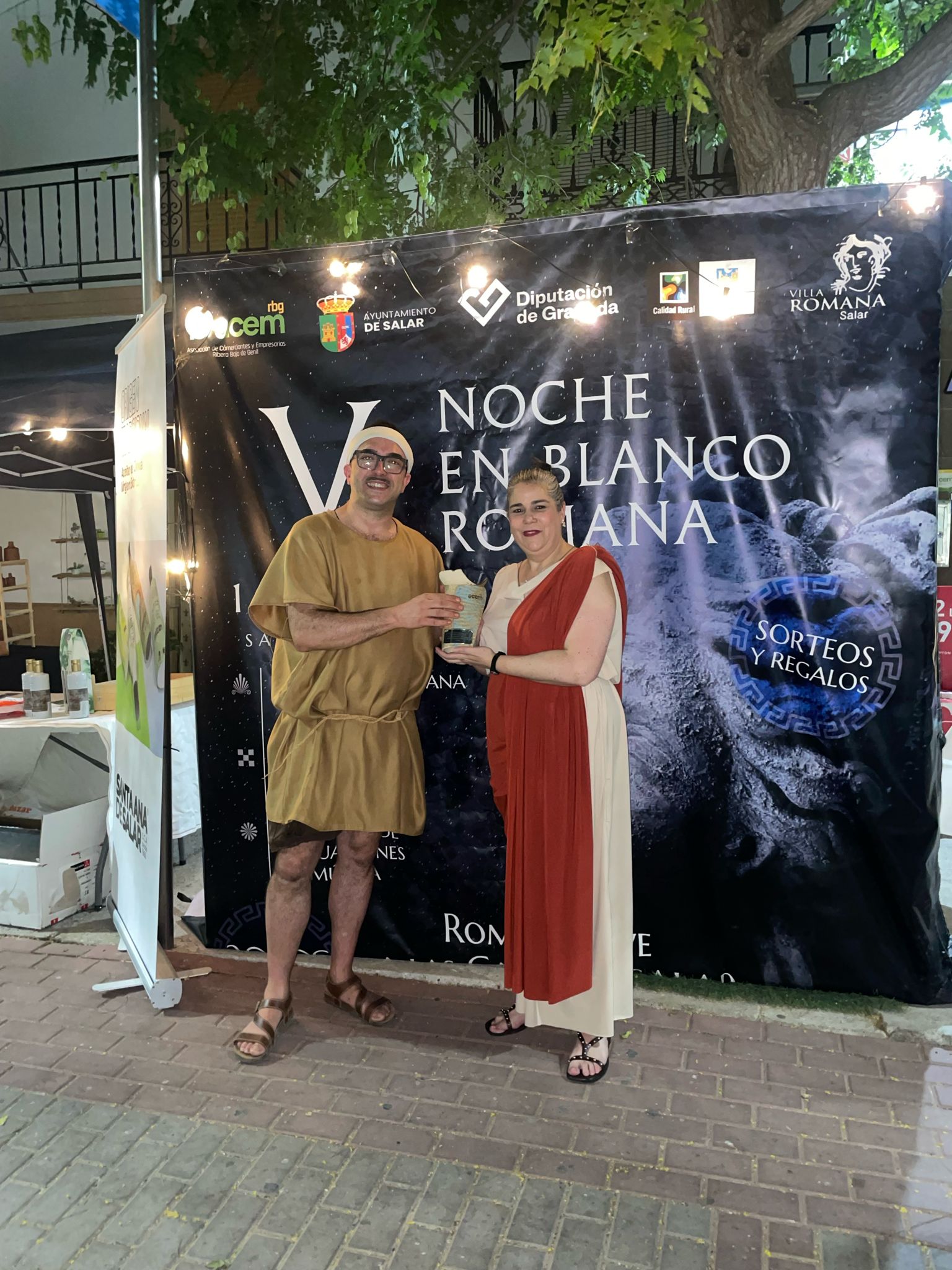
On the 19th June 2026, the Salar Heritage Community took part in a new edition of Noche en Blanco Romana, one of the municipality's most important cultural events, which each year brings together local residents, visitors, and institutions to discover and celebrate Salar's remarkable historical heritage.
The event, centred on the town's Roman archaeological heritage, featured a wide range of activities designed to make history accessible to audiences of all ages. Within this framework, the Heritage Community hosted its own information space, where it presented the work carried out over recent years to promote a participatory approach to cultural heritage management based on collaboration between local residents, associations, researchers, and public authorities.
Throughout the afternoon and evening, many visitors stopped by the Heritage Community's stand to learn first-hand about the initiatives currently being developed in the municipality. The event provided an excellent opportunity to present the project's objectives, exchange experiences with participants, and demonstrate how cultural heritage can become a powerful tool for strengthening local identity, encouraging community participation, and creating new opportunities for sustainable development.
Participation in the Noche en Blanco Romana also made it possible to establish new connections with people interested in joining the Heritage Community, expanding its network of collaborators and reinforcing one of the project's main goals: to develop a model of heritage and tourism management in which citizens play a leading role—not only as recipients of knowledge, but also as initiators of new actions and co-responsible for the conservation of cultural heritage.
The enthusiastic response from the public confirmed the growing interest in taking an active role in the protection and promotion of Salar's local heritage. Visitors had the opportunity to learn more about how the Heritage Community works, exchange ideas, propose new initiatives, and reflect on the importance of preserving a legacy that forms a fundamental part of the municipality's identity and collective memory.