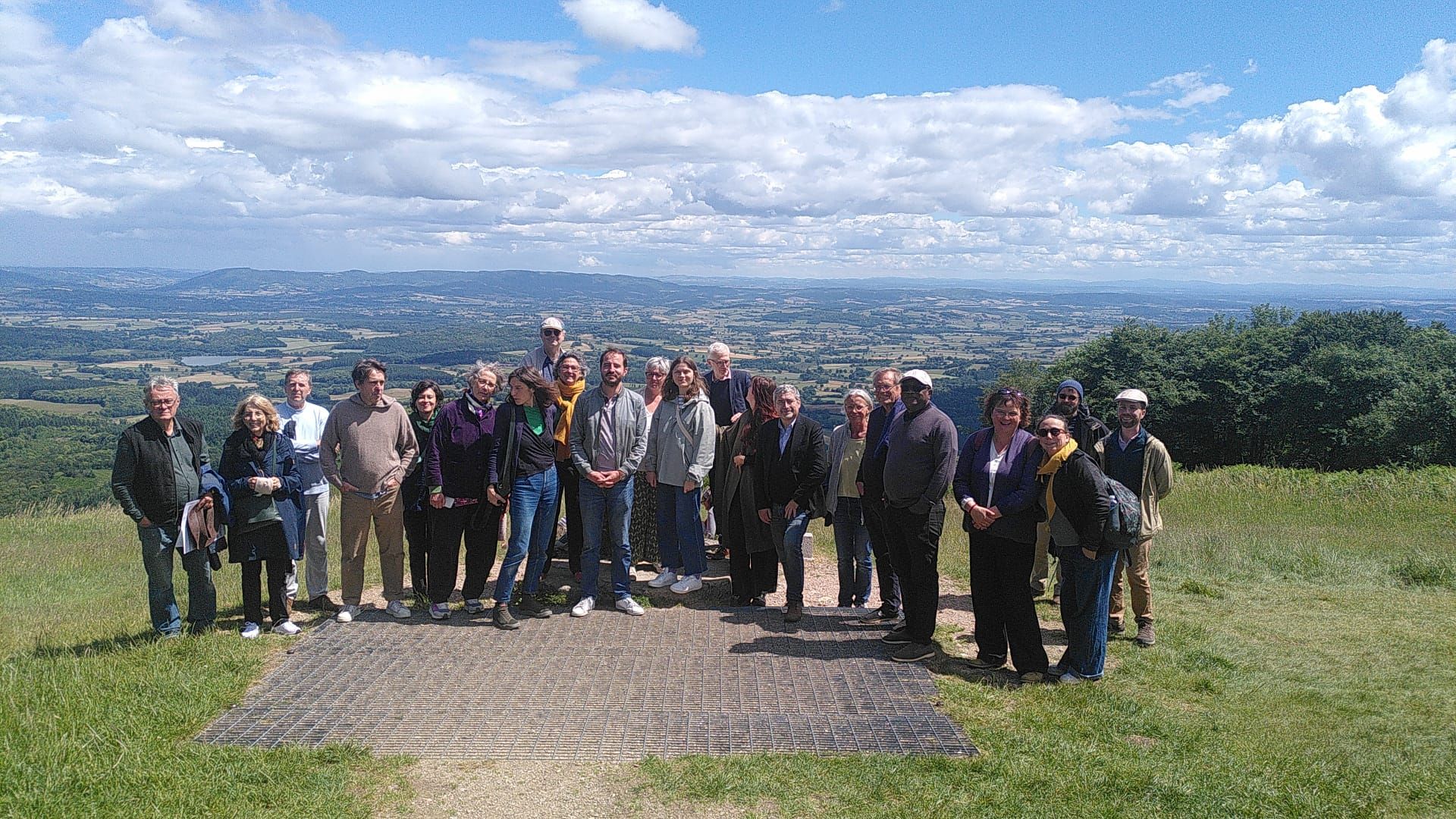
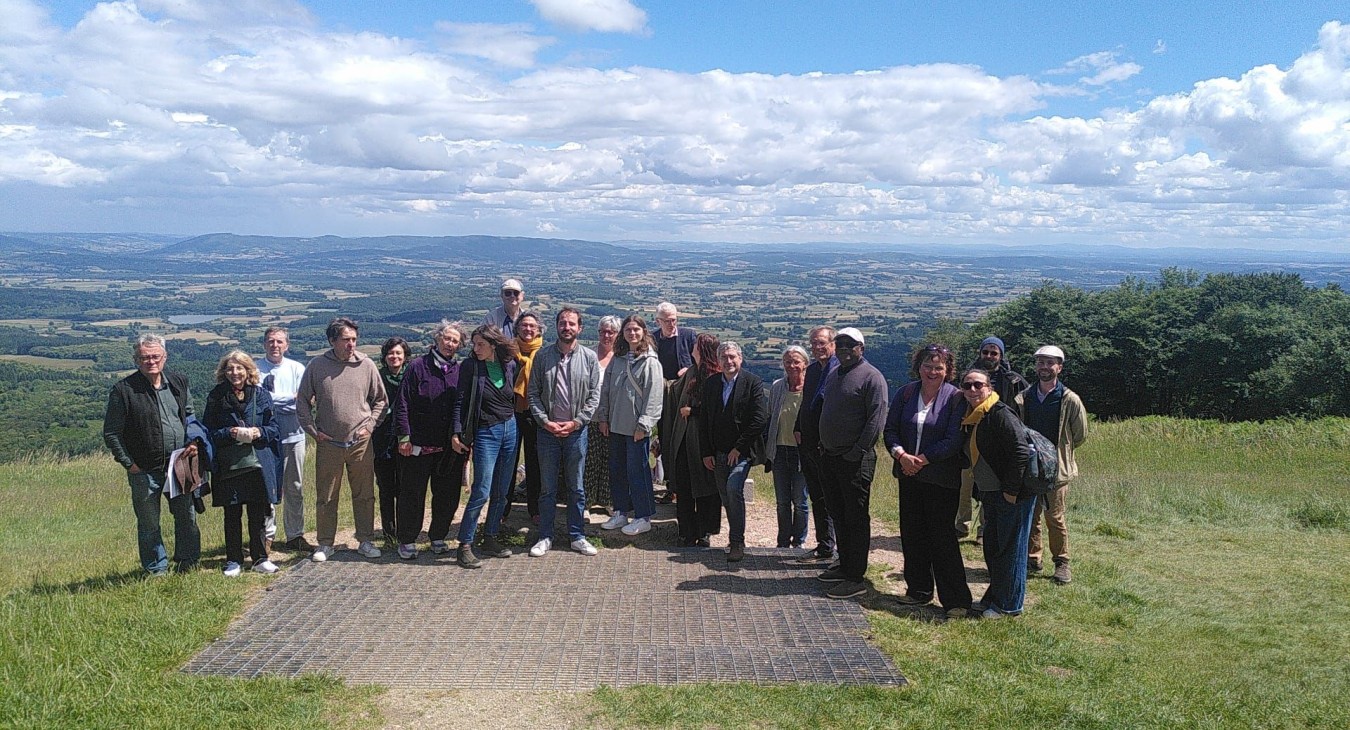
The Bibracte–Morvan des Sommets Heritage Community gathers at the 2026 Faro Francophone Network Annual Meeting on the theme "Landscape, Law and the Commons"
From June 8th-10th 2026, the Grand Site de France Bibracte–Morvan des Sommets hosted the Annual Meeting of the Faro Francophone Network. Over the course of three days, around fifty participants—including representatives of the Council of Europe, researchers, local and regional authorities, civil society organisations, heritage site managers and local stakeholders—came together to exchange ideas and collaborate around the theme "Landscape, Law and the Commons."
The event was organised within the framework of the SECreTOUR project and provided Bibracte with an opportunity to present the outcomes of its pilot project and of Work Package 1: Heritage Communities, Social Innovation and Sustainable Tourism Practices in Rural Areas.
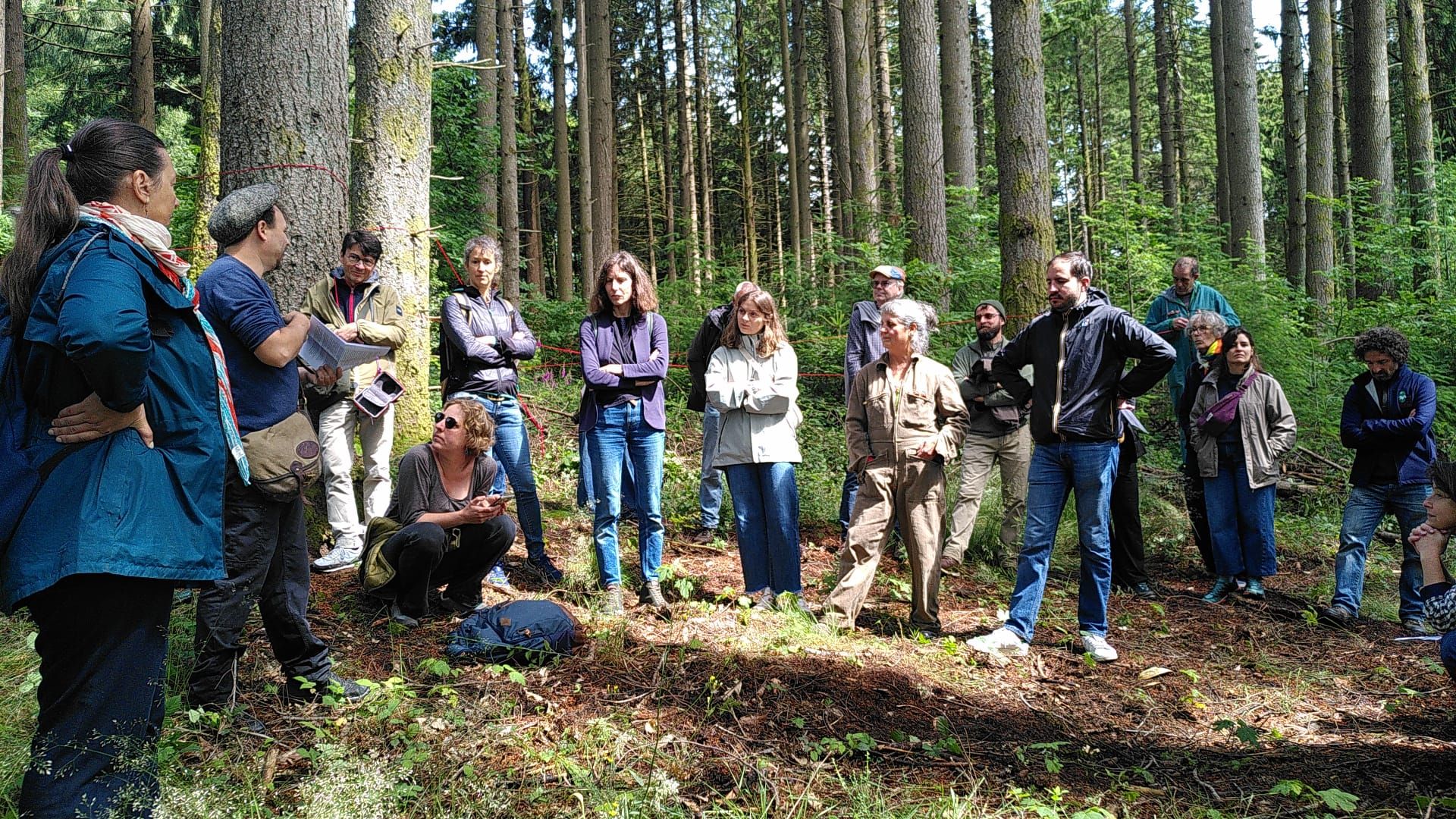
The meeting opened with an attentive walk organised by the associations Chemins, Le Facteur rural, and the Collectif des 400 mètres in the village of Glux-en-Glenne. Participants met local residents and discovered their personal stories and connections to the landscape of the Grand Site. For several years, these heritage walks - initially developed through Bibracte's pilot project under INCULTUM and later continued within SECreTOUR - have resulted from close cooperation between residents, local associations and municipalities across the Grand Site. This collaborative approach has led to a rich programme of performances, exhibitions, workshops and meetings with invited researchers, bringing together both professionals and local enthusiasts. The walks are coordinated by Chemins, the local heritage community dedicated to the landscapes of the Morvan des Sommets, as part of the Grand Site's Art et Territoire programme.
Presented as a "behind-the-scenes" exploration of a heritage walk, this field visit offered participants a practical, place-based introduction to the key concepts of the Faro Convention, particularly the notions of heritage community and citizen participation. It also highlighted the practical challenges addressed by Bibracte's pilot project, notably the management of rural paths as a shared commons and the use of the FACS Tourism approach as a catalyst for fostering innovative forms of territorial cooperation.
The meeting continued with a keynote address by Marie Cornu, CNRS Research Director, who offered a comparative reading of the Faro Convention and the European Landscape Convention. Her analysis highlighted the connections between these two European legal instruments and the ways in which they can be reappropriated by territorial stakeholders in support of the commons. Drawing on the work of Elinor Ostrom, she described the commons as resources that are inseparable from the communities responsible for governing them through collectively agreed rules. Marie Cornu had previously contributed to the event « Entretiens de Bibracte–Morvan 2025 – “Landscapes as Commons” as part of SECreTOUR in October 2025.
The programme also featured contributions from researchers at the Institute of Research and Higher Studies in Tourism (IREST) of Université Paris 1 Panthéon-Sorbonne, Université Bourgogne Europe, and Université Savoie Mont Blanc. Practitioners and project leaders experimenting with shared governance approaches also presented their initiatives. Through a series of case studies, participants explored how heritage communities draw on legal frameworks to recognise landscape as a commons—that is, as a shared heritage shaped by collective practices, responsibilities and the long-term commitment of the communities that inhabit it.
The case studies focused on the preservation and enhancement of ancestral systems of collective land ownership that promote the sustainable management of local resources and strengthen social cohesion; the co-production of knowledge and governance processes developed in support of a nomination of traditional irrigation know-how to UNESCO's Representative List of the Intangible Cultural Heritage of Humanity; participatory research carried out in the Morvan on community-based water governance building on the historical framework of Associations syndicales libres (voluntary landowners' associations); and the ways in which heritage communities emerge around heritage sites through the creation of multiple narratives and the development of more inclusive forms of collective memory.
In addition, during a participatory workshop facilitated by Bibracte partner the Maison du Patrimoine Oral de Bourgogne, members of the network engaged in dialogue with local associations involved in the stewardship and transmission of the Morvan's biocultural heritage. Several of the initiatives represented are part of the action-research programmes carried out by Bibracte and its partners within the Bibracte–Morvan des Sommets Grand Site de France Territorial Living Lab. These programmes aim to put the principles of the Faro Convention into practice while exploring new participatory approaches to landscape governance.
The final day of the programme was devoted to the network's internal seminar, followed by a visit to the archaeological and natural site of Bibracte.
The discussions initiated at Bibracte will contribute both to the ongoing work of the Faro Francophone Network on these themes and to the experiments being carried out by the Grand Site de France as part of the SECreTOUR project.
Further information
Programme of the 2026 Annual Meeting of the Faro Francophone Network (Bibracte)
https://grandsite-bibracte-morvan.fr/fr/rencontre-annuelle-2026-du-reseau-francophone-de-faro
About the Faro Francophone Network
The Faro Francophone Network brings together civil society organisations, public institutions and local authorities committed to a dynamic and democratic vision of cultural heritage, rooted in diversity and human values. It provides a unique space for dialogue, exchange and collaboration, helping to overcome the hierarchical relationships that can sometimes exist between communities and experts, or between citizens and institutions.
Inspired by the Pan-European Faro Network, its members promote the principles of the Council of Europe's Faro Convention, encouraging in particular their adoption by local and regional authorities through public policies. The network is built on the contributions of its members, who share knowledge, experience and practical tools. It fosters synergies through joint initiatives and collaborative research.
In line with the principles of the Faro Convention, the network seeks to strengthen mutual recognition and cooperation among heritage communities, both locally and internationally, while promoting more democratic forms of heritage governance within public policies by ensuring that people's fundamental cultural rights are fully recognised and implemented.